Directed by: Adrian Chiarella
Written by: Adrian Chiarella
Run Time: 1 hour 28 minutes
With both Talk to Me (2022) and Bring Her Back (2025), YouTubers-turned-directors Danny and Michael Philippou have ushered Australian horror into rude health. There are, of course, many other notable titles from years past, Jennifer Kent’s The Babadook (2014) perhaps being the most celebrated of all, but the Philippou brothers’ back-to-back successes with their first two features have given the country’s horror landscape a renewed sense of presence and prestige — one that Adrian Chiarella’s debut, Leviticus, arrives firmly amidst.
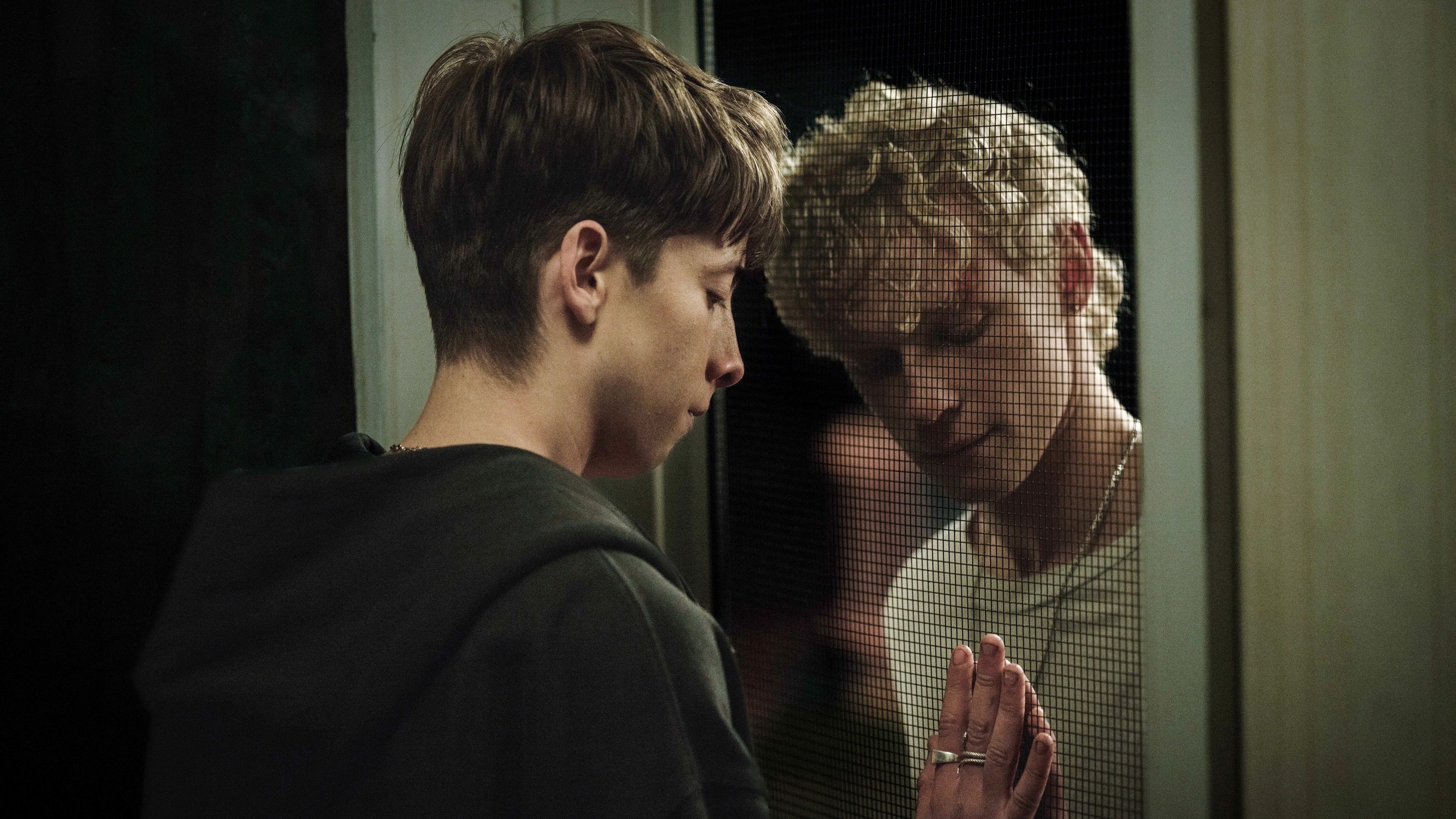
The film follows Naim (Joe Bird), a teenager who relocates with his mother, Arlene (Mia Wasikowska), to a small town in Victoria following the death of his father. They join a local evangelical church, where Arlene encourages Naim to make new friends. Unbeknownst to her, he has already become involved with Ryan (Stacy Clausen), another teenager and fellow congregation member. However, when the church discovers that Ryan and the pastor’s son, Hunter (Jeremy Blewitt), are gay, they recruit a deliverance healer to purge them of their same-sex attraction. Instead, the ritual leaves them with a deadly curse.
The film opens in fairly generic genre fashion, featuring a short sequence that teases the curse that will eventually attach itself to the main characters. However, aside from this moment, Leviticus actually unfolds more like a queer coming-of-age drama than a horror. Naim and Ryan are seen hanging out together outside of school. At first, there’s a physical tension between the pair, an aggression even, as though they’re fighting some kind of primal urge. However, this soon softens, becoming affectionate and intimate. Their romance is established quickly, but Joe Bird and Stacy Clausen’s youthful innocence and natural chemistry make their relationship feel both genuine and sweet.
It’s this endearing connection that makes the subsequent horror feel all the crueler. After Ryan and Hunter, the curse — which sees an evil entity take the form of the person you most desire — befalls Naim too. It ripples through their church community like a sinister plague, punishing them for behaviour that their parents and church leaders consider sinful. The narrative not only isolates them from their families, but from each other, as the entity only attacks when they’re alone. Yet, unable to resist their yearning, Naim and Ryan become trapped in a dangerous cycle of love and violence, one that Leviticus steadily escalates.
Creating this intriguing genre blend of queer romance and religious horror, Chiarella effectively depicts the church’s undeniable role in violence, at times fatal, against queer young people. He’s not discreet about it either, with the curse proving a direct consequence of the aggressive religious conversion practices shown here — think less “pray the gay away” and more full-blown “your mother sucks cocks in hell”-style exorcism. However, in attempting to remove what is only natural, the church instead inflicts shame, guilt and fear upon its victims. Manifested as a supernatural threat that encapsulates the complexities of such a combination of feelings, Leviticus offers a haunting representation of repressed homosexuality within a religious context.
Despite such an informed and interesting depiction, much of Leviticus feels familiar. It’s almost impossible to make a horror movie without succumbing to a few genre tropes, and Chiarella can’t resist temptation. His story adopts similar patterns to those that have come before — It Follows (2014) and Smile (2022) for example — hitting the same narrative beats that see characters becoming consumed by a curse, tracking down those it has affected before and then attempting to overcome it themselves. Yet infusing this kind of horror staple with a queer narrative is enough to combat any accusations of unoriginality, with the film’s clear earnestness ensuring it has a distinctive voice of its own.
Its young cast helps deliver this, with a touching portrayal of both the vulnerability and resilience of queer youth. As Naim, Bird is a teenager unafraid to ask for help; his character is a welcome change from the genre’s many other protagonists who keep their horrors hidden. He discloses his ordeals to friends, family members and even the police, but their unwillingness to offer sanctuary only reinforces his exile, and Bird captures this anguish with aplomb. Opposite him, as Ryan, Clausen feels more accustomed to this isolation. He affords the character a more worldly experience that adds to his appeal, while his poignant delivery of Ryan’s declaration that, if he’s to be haunted by anyone, he only wants it to be Naim, affirms the couple’s romance to great effect.
With such tenderness in close proximity to absolute terror, Leviticus achieves an admirable balance of tone. Those hoping for a more conventional horror may not be pleased by the lack of more traditional jump scares, but this is a film that’s more atmospheric than wholly horrifying. Nevertheless, Chiarella does succeed in creating sequences of dread — photobooths, gas stations and bus rides all go from everyday to eerie — but at times lacks the confidence to let them properly linger, preventing their unease from become truly excruciating.
But by acknowledging these abuses of religious authority — the scariest parts of the film are not the vicious entity attacks, but the heartbreaking betrayals of trust — Leviticus doesn’t hold back on the fire and brimstone. Yet, in grounding his horror debut in the genuine lived experiences of many, Chiarella also offers an unexpected chance for catharsis, for salvation even. And surely this choice, to embrace hope, is the boldest move he could have made.
Star Rating: ★ ★ ★






Leave a comment