Directed by: RaMell Ross
Written by: RaMell Ross and Joslyn Barnes
Run Time: 2 hours 20 minutes
Films that explore harrowing events from history have become so commonplace that nowadays their arrival is often met with unfavourable cries of “Oscar bait.” Subsequently it takes a lot for dramas like these to really stand out, but a select few do; enter RaMell Ross’s debut narrative feature, Nickel Boys. With significant support behind him after his acclaimed documentary, Hale County This Morning, This Evening (2018), plus the backing of Brad Pitt’s production company Plan B, Nickel Boys arrives with much anticipation – and it’s well warranted.
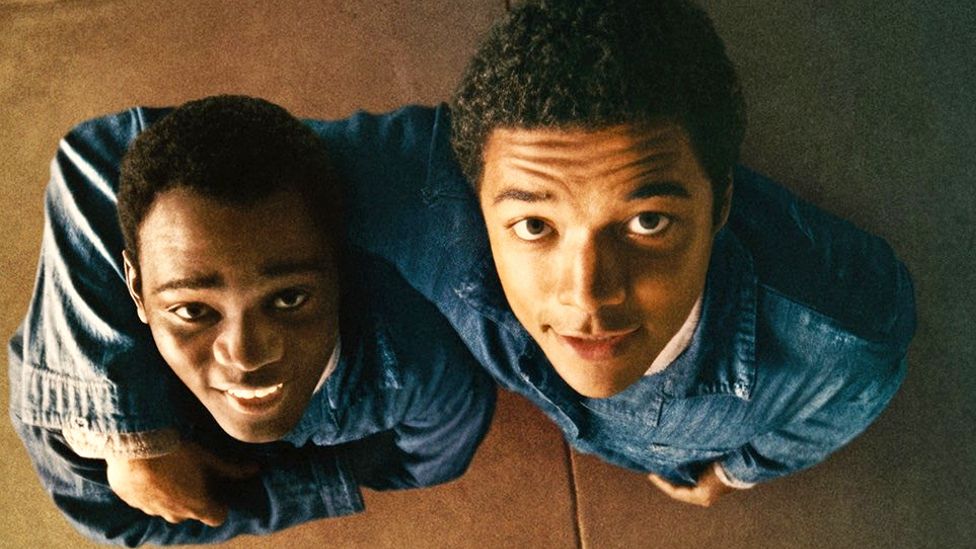
Based on the Colson Whitehead novel of the same name, this film tells the story of Elwood (Ethan Herisse), an African-American teenager living with his grandmother (Aunjanue Ellis-Taylor), who is falsely accused of being an accomplice to a carjacking. Sent to the segregated Nickel Academy reform school (loosely based on the Dozier School for Boys), he meets and becomes close friends with Turner (Brandon Wilson), as the two are forced to endure an academic life punctuated with abuse, neglect and injustice.
It’s hard to believe that Nickel Boys is only Ross’ first narrative feature, because the style in which he chooses to communicate this story is one even the most experienced of directors would find hard to pull off. The film is shot from Elwood and Turner’s point of view, providing many impressive long takes when the two are in separate locations and seamless cross-cutting when they converse with one another.
Its storytelling techniques are reminiscent of Jonathan Glazer’s recent historical drama The Zone of Interest (2023), in the way that the horrors and context are implied through dialogue and sound, rather than explicitly shown. However, where that film has a detached fly-on-the-wall perspective, Nickel Boys treats the audience as if they’re the main character, resulting in a very immersive experience.
At first, the way scenes are edited together is a little jarring; for example, viewers see certain things happen to Elwood quite early on, but these scenes cut to black before giving the full context. But eventually, this style becomes mesmerising, with scenes of Elwood trying to overcome his trauma as an adult offering further enlightenment.
One moment where the editing and direction prove particularly memorable is during a sequence set at a boxing ring. The camera cuts to a character as they observe something new about the people around them, and with the amount of extras present for this scene it’s remarkable just how naturally Ross captures the moment. It really feels like you’re watching the scene unfold in real time alongside the characters. The choreography and continuity of character positions and body language when cutting between the two perspectives is genuinely breathtaking, and this precision powerfully escalates the tension of the scene.
The film’s use of music is similarly effective, never used to manipulate the audience but instead to enhance the film’s unnerving atmosphere. The underlying tension throughout the film is amplified through orchestral strings and ambient sounds, with reverb and distortion effects to make everything feel suitably off-kilter. In turn these effects also cleverly imply the haziness of adult Elwood’s memories about Nickel Academy.
Lead actors Ethan Herisse and Brandon Wilson have great chemistry, communicating a real sense of vulnerability and care for one another. Their work makes the story feel just as authentic as the filmmaking does. However, as Elwood’s grandmother, it’s Aunjanue Ellis-Taylor who gives the stand-out performance. She’s the beating heart and emotional core of the film and truly shines as the beacon of hope for Elwood to focus on.
So while the cast easily impress, the film’s style is something that may not work for everyone as successfully. Nonetheless, RaMell Ross’ ingenuity with non-linear storytelling ensures that Nickel Boys is a truly excellent start to his narrative film career. It’s like a cinematic jigsaw puzzle, with many shots that at first seem random or unrelated to previous scenes later piecing together to create a fulfilling and memorable picture. Ultimately, as the film moves closer to its gripping conclusion it leaves an impressive imprint on the mind that, despite being an undeniably tough watch, demands a second viewing.
Star Rating: ★ ★ ★ ★

 Not Too Loud
Leave a reply to Where it all Went Wrong for These 9 Best Picture Contenders – Not Too Loud Cancel reply