
Directed by: Pauline Loquès
Written by: Pauline Loquès and Maud Ameline
Run Time: 1 hour 36 minutes
Films about cancer can be some of cinema’s most cliched. Whether it’s cancer comedies, more candid documentaries, or those tacky titles about terminally-ill teenagers, it’s safe to say the subgenre is rather crowded. This prevalence of so many similar stories is likely the reason for their often generic feel, so when one comes along that does things slightly differently – like Pauline Loquès’ Nino – it offers both a refreshing change and a sigh of relief.
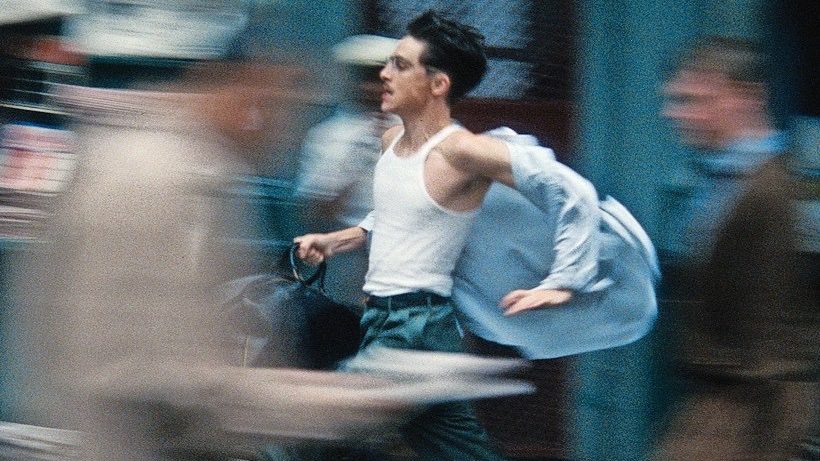
Rather than charting an entire cancer journey, her film follows a young man, Nino (Théodore Pellerin), over the weekend of his 29th birthday. After chasing up the results of some recent medical tests, he receives the shocking news that he has cancer. Fast-tracked for treatment due to his youth, he’s scheduled to begin chemotherapy the following Monday. Until then, he’s left carrying the weight of his diagnosis as he tries to navigate the weekend as if everything were normal. Nino tells the more focused, self-contained story of these three days.
Setting out with much promise, Loquès gets her story underway without hesitation. Her opening scenes depict Nino receiving his diagnosis, in which she also captures the chaotic nature of the modern healthcare system. Nino starts on the wrong floor, there’s been a mix-up in his appointments due to new software and there’s noisy building work going on right outside the room in which he’s received the news. The lack of sensitivity is startling, but sadly with services stretched so thin, this is just the norm. His life has just been brought to a standstill, but the world around him hasn’t stopped. As he eventually leaves the hospital, Loquès slowly pans out taking Nino from the central focus, to an insignificant figure, just one among many.
It’s a subtle but deliberate choice that demonstrates the crushing reality of this life-altering moment. Such an attuned opening sets the film up well, and as Nino, Théodore Pellerin is more than capable of moving things forward. However, what prevents Nino from gaining any kind of momentum to do so is its tedious screenplay, penned by Loquès and writing partner Maud Ameline. Their premise is good and it does invite a certain stillness as Nino tries to process his feelings. Yet, there’s not enough substance alongside this to offer anything particularly engaging for audiences, feeling more like an arduous endeavour to find something profound that just simply isn’t there.
It’s a shame as Pellerin is doing good work here. From his initial disbelief to his reluctance to reveal the truth to others, he brings a sensibility to the role that feels realistic and well-placed. His co-stars are similarly reliable and help to decorate Nino’s life with an array of personalities – friends, family and in some cases complete strangers – and together they do create some moving moments. A night spent at his mother’s house and a drunken bathroom interaction with a friend at his party are where Nino feels most auspicious, but when strung together with the larger collection of other, less interesting encounters, they struggle to amount to much of anything at all.
Nevertheless, it’s an objectively compassionate film, one that slows down and offers its protagonist the time and attention he deserves. It’s just all too underdeveloped. There’s value in giving this brief window of time and its titular character space to breathe, but the matter-of-fact presentation of it alone isn’t enough to take Nino anywhere beyond the unremarkable.
Star Rating: ★ ★



 Not Too Loud
Leave a comment