Directed by: Nia DaCosta
Written by: Alex Garland
Run Time: 1 hour 49 minutes
Danny Boyle’s 28 Years Later (2025) demanded serious attention from its very first trailer – itself a genuine thrill – and when the film eventually opened to critical acclaim, it was evident that it was going to make a real impression, and not just because of its sizeable zombie appendage. In unveiling breakout star Alfie Williams, favouring emotional drama over infected action, and producing a particularly provocative ending that had everyone talking, it quickly became one of the year’s defining films. And now, 28 weeks later, its sequel, Nia DaCosta’s The Bone Temple, has arrived. Shot back-to-back with Boyle’s film, its timely release sees it perfectly poised to revisit the characters and re-engage audiences, just as the dystopian dust was starting to settle.
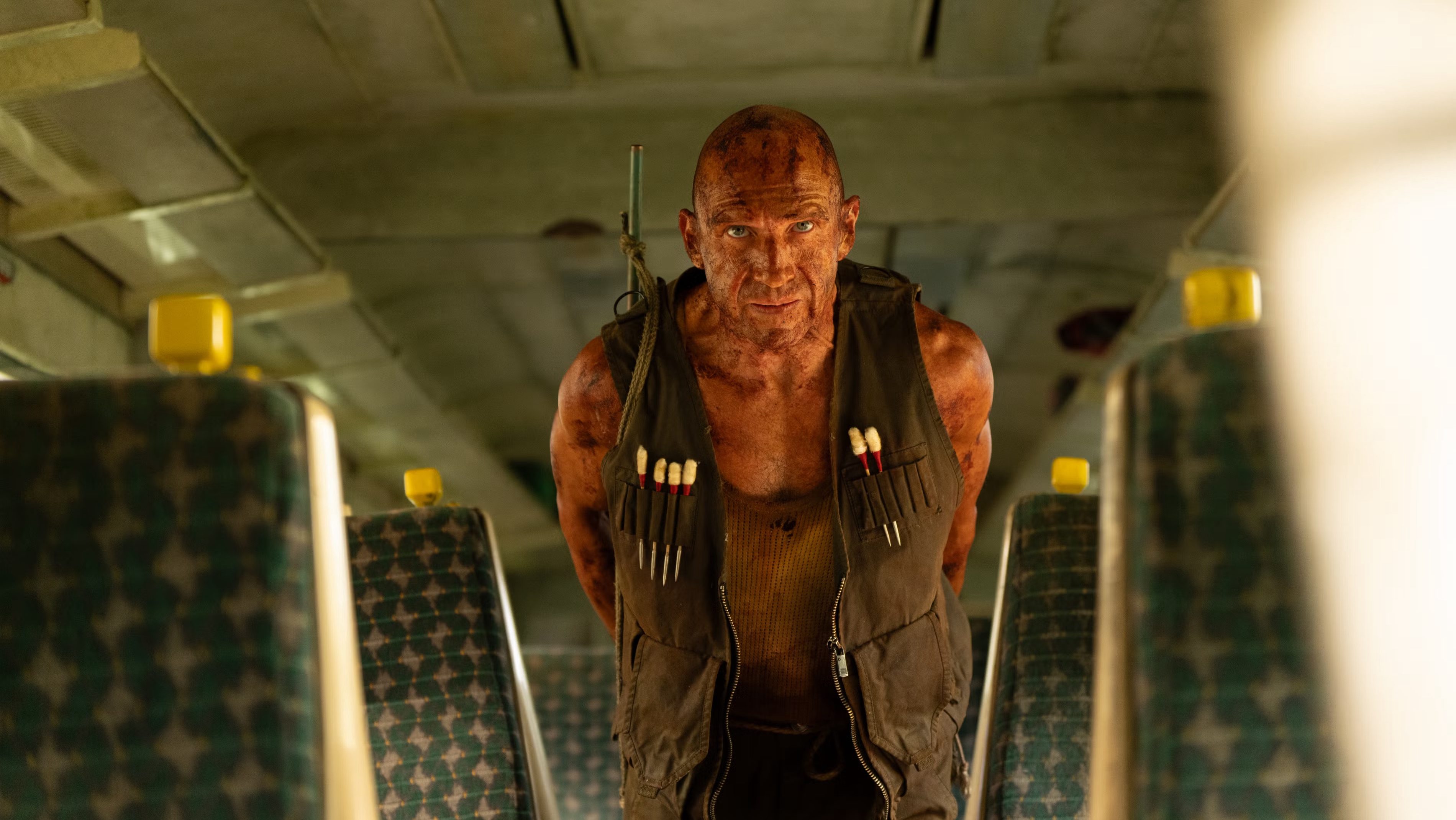
Unlike the previous time gaps between series’ sequels, The Bone Temple begins shortly after the end of 28 Years Later. Having survived the events of the first film, Spike (Alfie Williams) now finds himself fallen in with a violent gang led by the sinister Sir Lord Jimmy Crystal (Jack O’Connell). Elsewhere, Dr. Kelson (Ralph Fiennes) continues his work at the titular bone temple, while also gaining a better understanding of the rage virus through his increased exposure to Alpha, Samson (Chi Lewis-Parry).
And while picking up pretty much exactly where 28 Years Later left off, screenwriter Alex Garland takes this new chapter in a completely different direction, one that sees Spike feature less prominently, with Dr. Kelson instead becoming the main protagonist. It’s a thoughtful decision that allows DaCosta’s film to take on a life of its own, rather than simply exist under the shadow of its formidable predecessor. Immediately, the exploration of Dr. Kelson’s quest for scientific knowledge and understanding through his relationship with Samson offers a really unexpected levity, one that offsets the darkness encroaching around it.
Their simultaneous search for respite, by way of the morphine blow darts Dr. Kelson uses to subdue Samson, takes the pair on a transformative journey from prey and predator, to doctor and patient. But it doesn’t stop there, blossoming into a budding bromance complete with wholesome heart to hearts and dance sequences set to Duran Duran. In moments it takes on the look and feel of an SNL skit and it can be hard to imagine any Alpha from the previous film entering this kind of state. But remarkably, there’s a heartwarming and earnest quality to it all – made convincing by an especially sincere Ralph Fiennes – that somehow makes it work, giving this desolate dystopia a glimmer of hope and joy.
Conversely, when the film casts its eye over Spike and Jimmy the mood becomes far less optimistic. It’s here that the film’s noticeable nasty streak runs wild, as Jack O’Connell’s satanist gang leader inflicts extreme acts of violence upon other survivors of the virus. Taking instruction from “Old Nick” – who Jimmy believes is his father – he disguises this brutal torture as “charity” and with Spike now a member of his gang, or one of his “fingers,” he finds himself trapped in a merciless spiral of savagery. At times this barbarity can feel needless and it does create some deeply upsetting scenes, but this is a horror film and it makes the degree of Jimmy’s disturbed villainy abundantly clear. Garland manages to balance this with a dark sense of humour, one that might not work for everyone, but nonetheless offers brief relief from these more graphic scenes.
It’s a wonder that the script is able to remain so steady though, with each of these polarising sections leaning into their extremes so hard. Of course it helps that each is propped up by two great performances. O’Connell is magnetic in a way that you dare not take your eyes off him for fear of what he might do next. While Fiennes, in particular, is just superb. He was one of the many highlights in 28 Years Later, so it’s wonderful to see him lead its sequel so generously. While one is consumed with radical religion and the other is driven by scientific discovery, their paths slowly begin to converge together, culminating in a climax full of tension, intrigue and complete and utter spectacle. It’s a finale for the ages and sees Fiennes find an even further level of fervor to fuel this fiery final act.
Perhaps the only thing missing – not from the finale specifically, but the film as a whole – is the amazing Young Fathers’ score we were blessed with in the previous film, however rather than directly compete with their work, composer Hildur Guðnadóttir’s compositions here subtly accompany the film’s drama in a more unassuming way. Their repetitive melodies work in tandem with the measured realisations of the plot, giving elongated moments of the story the gravitas they deserve, while a range of inspired needle drops are favoured to soundtrack the more involved moments of Garland’s multifaceted script.
And it’s this versatile quality that prevents The Bone Temple from becoming the glorified stepping stone between trilogy bookends that it so easily could have been. In shifting perspective and tone so decidedly it tells its own story of faith versus fact in unbridled but assured fashion. It still bridges the gap though, laying the foundations for what’s (hopefully) to come in a mature and grounded way that feels increasingly rare in modern franchise filmmaking. For that alone, it deserves the final chapter. Let’s just hope it arrives sooner, rather than years later.
Star Rating: ★ ★ ★ ★
 Not Too Loud
Leave a comment