Directed by: Sophie Dupuis
Written by: Sophie Dupuis
Run Time: 1 hour 42 mins
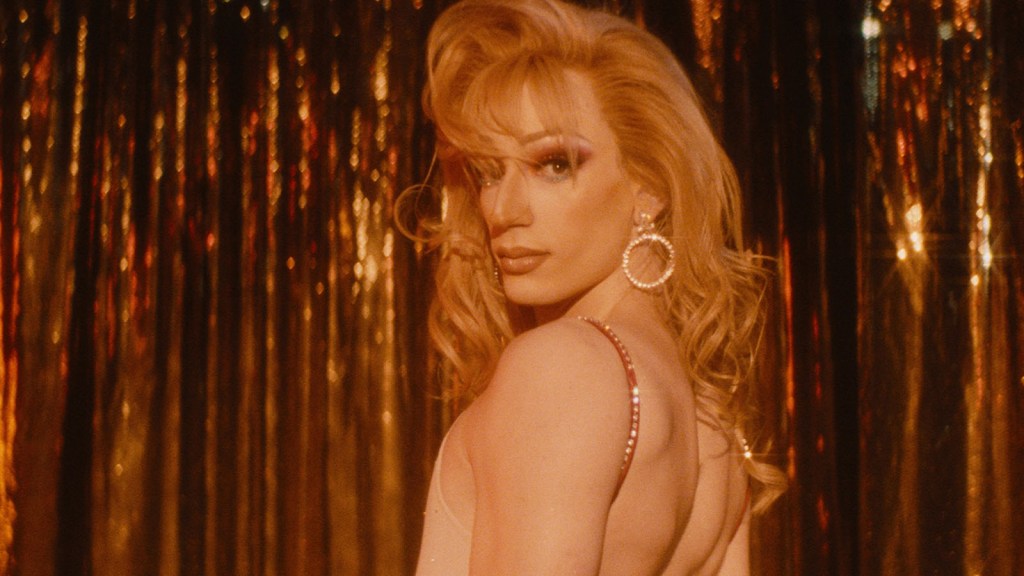
Alongside their recent rise in popularity, drag queens have also been experiencing increased instances of animosity from select groups. It’s reassuring then, that despite these unfounded examples of opposition, there’s been no shortage of queens on our screens. In recent years alone, between Femme (2023), Unicorns (2023) and Layla (2024), drag has been enjoying its fair share of the cinematic spotlight, and rightfully so. With Canadian director Sophie Dupuis’ new film, Solo being the latest title to contribute to this welcome and continued display of queer visibility.
Simon (Théodore Pellerin) is a young drag queen living and working in Montreal. He has a close bond with his sister Maude (Alice Moreault), a talented costume designer who makes most of his outfits, but both siblings have a more complicated relationship with their estranged mother (Anne-Marie Cadieux), who left during their youth to pursue a career in opera. Now a celebrated star, and with her latest tour stopping in Montreal, she unexpectedly reaches out to them both. Meanwhile, Simon has become romantically and creatively involved with the scene’s newest queen, Olivier (Félix Maritaud) but it quickly becomes apparent that what’s good for his art, isn’t necessarily good for his heart.
With the muffled sounds of ABBA’s ‘Voulez-Vous’ pulsating through the drag bar walls, Dupuis immediately entices audiences to come in and discover all that this fabulous art form has to offer. It’s the first of many crowd-pleasing queer classics that soundtrack her film, helping to set the scene and create a convincing atmosphere for the queer venue that much of the film is set in. With the array of queens performing only furthering this authenticity, it showcases the variety that drag provides and establishes the key figures of Simon’s queer family.
Outside the club he maintains a great relationship with his biological family too, regularly attending Sunday brunch at his dad’s house. It’s here where he and his sister Maude learn of their mother’s invitation to reunite with them. Their varying reactions descend into an animated argument and begins to unveil the delicate dynamics between the trio. This ultimately provides much of the basis for Dupuis’ competent screenplay, bolstered by Simon and Olivier’s tumultuous relationship.
It’s no surprise to see Félix Maritaud starring here, as his work in the likes of 120 BPM (2017), Knife + Heart (2018) and Sauvage (2018) has made him a staple of modern queer cinema. His casting is more thoughtful than just this though, as his natural charm places him in the perfect position to effectively enchant both Simon and the audience, presenting Olivier as premium boyfriend material. All before the relationship suddenly starts to sour, and it’s here – more so than his amateurish drag numbers – that Maritaud’s ability as an actor becomes most evident. Impressively undoing all of Olivier’s initial appeal, he gradually reveals his true nature, which in reality is much meaner and far more manipulative.
However, Simon is blinded to the fact, perhaps by all the sequins and sparkle of their creative collaborations, but there’s a deeper reason, one that’s directly linked to his mother. As while co-stars Théodore Pellerin and Félix Maritaud share a sensual romantic chemistry, and then a more unpredictable but still compelling tension, it’s Simon’s relationship with his mother Claire that becomes the most interesting.
As an artist himself, he approaches their relationship and his mother’s past choices with an understanding that’s more unique, and crucially, more forgiving than most, even if it’s not one that is met with the same respect back. “You’re still doing that?” she asks when he tells her about his drag. And when his artistic endeavours are already being questioned by Olivier, it’s additional inquisitions like this that see Simon start to stumble, when before his strut was as steady as they come.
But Solo isn’t a story about Simon becoming a better drag queen, he’s already got everything he needs to succeed when we first meet him. It’s about him realising this. Not growing artistically, but personally. And through Théodore Pellerin, Simon is given an endearing, somewhat naive quality that ensures audiences will root for him, even as he inadvertently hurts those around him who actually do care. While his confident moments in drag sell his character’s artistry in a bona fide fashion that cannot be denied.
So while Solo astutely observes that our ability to be artistic and explore our creativity isn’t dependant on the approval of others, it also keenly reminds us that those who really do want to see us shine are probably right in front of us – and we’d do well not to neglect them.
Star Rating: ★ ★ ★

 Not Too Loud
Leave a comment