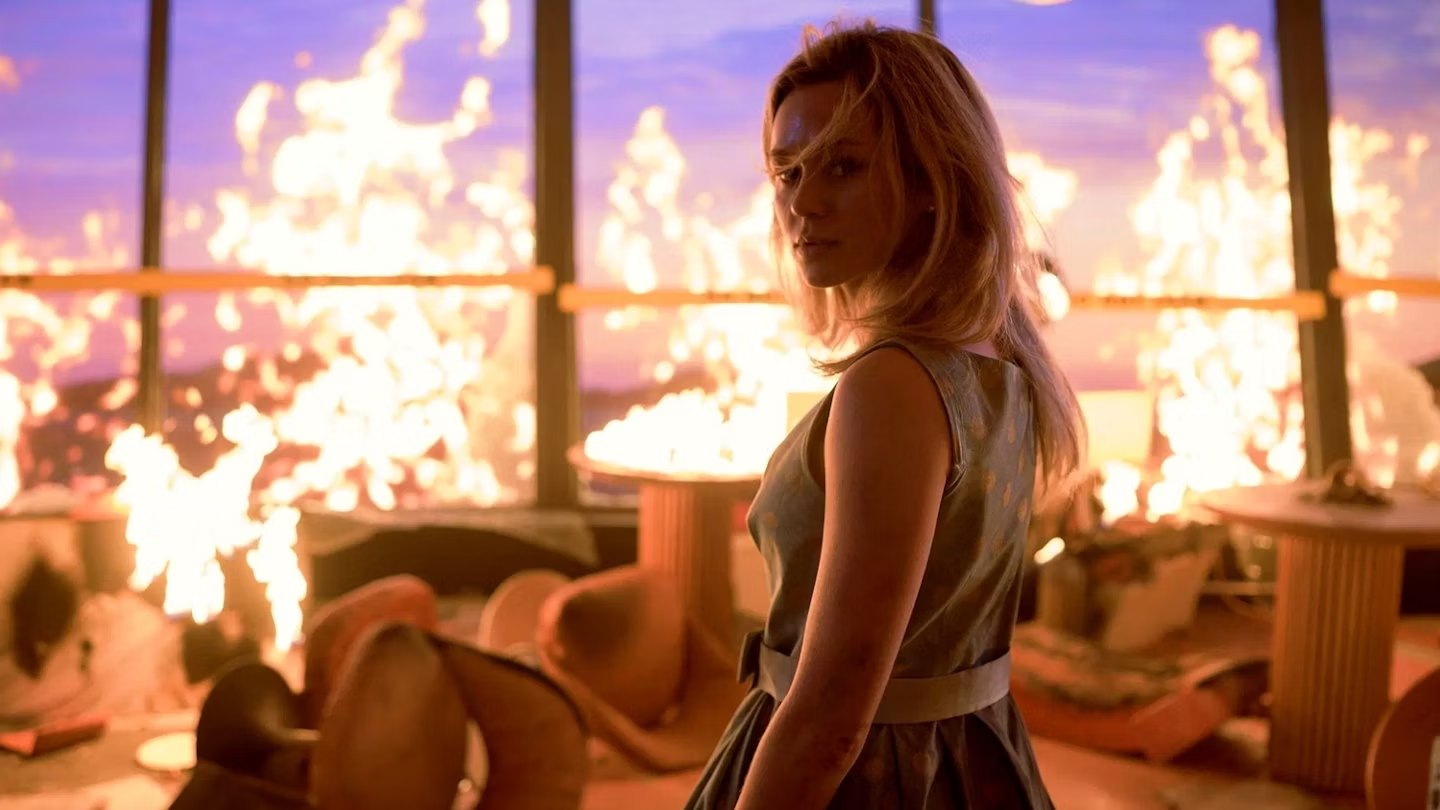
Directed by: Zach Lipovsky and Adam Stein
Written by: Guy Busick and Lori Evans Taylor
Run Time: 1 hour 50 minutes
The turn of the century saw a lot of horror franchises exploding in popularity – so much so that it would have been easy for a series like Final Destination to get lost in the conversation, but it didn’t. Despite not having a marketable villainous figure such as Scream’s Ghostface or Saw’s Jigsaw, it still managed to stand out; the idea of an invisible force trying to kill its victims by using everything around them is ingenious. And the elaborate death sequences that followed cemented its place in the genre.
Based on a rejected idea for an episode of The X Files, each Final Destination film sees one person envision themselves and a group of others dying in a large-scale disaster, only for Death itself to find them and put things back in order after they’ve escaped and “cheated” him. For the sixth entry, and the first in 14 years, Final Destination Bloodlines looks to revitalise the franchise by introducing a new generation to the series while still inserting enough fan service to please its original fans.
Bloodlines starts with college student Stefani (Kaitlyn Santa Juana) struggling with a recurring nightmare. In it, her grandmother Iris dies in a restaurant situated at the top of a skyscraper, after it tragically collapses. Returning home to figure out the cause of the nightmare, she realises after meeting with her grandmother that the lives of her extended family are all at risk. This is due to Iris having previously experienced the same vision, which lead to her saving everyone from the impending disaster. However, Stefani realises that this means she and her family were never meant to exist, thus beginning Death’s signature over-the-top and exaggerated ways of correcting his evil plan.
Final Destination has seen quite a shift in tone throughout its 25 year run. The first three films were a lot more suspense-based, with more buildup creating a bleak and supernatural atmosphere, whereas the fourth and fifth instalments aimed for a more silly and overtly comedic feel, mainly due to both taking advantage of the 3D craze of the late 2000s and early 2010s.
After 14 years and a drastically changing horror landscape, Bloodlines arrives in the wake of David Gordon Green’s Halloween trilogy and Radio Silence’s Scream sequels. The first act seems too heavily influenced by these rebooted franchises, seeing the main character discover a secret family past while the outcast of the family hides in a secluded location. It feels a little jarring for a Final Destination film and it maybe tries to follow the successful formula of these recent reboots a little too closely, but the second and third acts turn the film into the riot it deserves to be.
At 110 minutes, Final Destination Bloodlines is the series’ longest instalment yet, partly because of the extended opening premonition sequence. Directors Zach Lipovsky and Adam Stein build the set piece up to an impressive level of tension, helped by Brec Bassinger’s performance as young Iris, who notices multiple omens that increase her paranoia. Once the destruction begins, it is executed in spectacularly gory fashion, even if the visual effects do look rather glossy and uncanny at times – it says a lot that the bridge collapse in Final Destination 5 (2011) looks more polished.
The same can be said for the franchise’s signature death scenes; whilst the over-reliance of CGI is a bit of a letdown, especially when the franchise is known for its convincing blend of visual and practical effects, many of them are as over-the-top and darkly comedic as ever. A lot of the death scenes do deviate from the elaborate build-ups the franchise is known for, but some do still have the classic tension building setups, before the inevitable moments of jaw-dropping, gleeful gore. In particular, one scene in a tattoo parlour and another in a hospital are the film’s highlights.
Writers Guy Busick and Lori Evans Taylor don’t just make sure fans get the gory kills and elaborate set pieces that are expected from the franchise; they also attempt to overcome the series’ reputation for weak character development by taking a unique approach to creating the ensemble attempting to evade Death. Rather than following the immediate group of people who escaped their doomed fate, we instead follow an estranged extended family who slowly realise their existence is only possible due to their matriarch and her premonition. Thankfully missing from this ensemble is the sleazy predatory creep type which has often permeated the previous instalments. Instead, we’re introduced to a complicated but more likeable bunch, even if some characters are clearly only there to up the kill count.
Standouts in the supporting cast include Stefani’s cousin Erik (Richard Harmon), a tattoo and piercing enthusiast who provides much of the film’s comedy, and Stefani’s mother Darlene (Rya Kihlstedt), who after being raised by an overbearing Iris, leaves her own family out of fear of passing that trauma down to her children. Sadly, Stefani herself isn’t given much of a personality, though actress Kaitlyn Santa Juana does her best to sell the character’s desperation and panic throughout the film.
However, the standout character, and scene for that matter, belongs to none other than franchise regular William Bludworth, the mysterious mortician played by the excellent Tony Todd, who appears posthumously. Here as always to explain to the new characters the logic of Death’s design, Todd and the film’s writers forgo the creepy personality of the character from previous instalments in favour of a more peaceful portrayal. It’s been revealed by longtime producer Craig Perry that Bludworth’s closing lines in the film are Todd’s own personal and final goodbye to the fans. It’s remarkable that in a film with so much death and destruction, its best scene is so quiet and emotionally powerful. Should Lipovsky and Stein return for a sequel, there is a lot of potential for a Final Destination film to get more philosophical, perhaps offering a fresher and more exciting take on the series’ concept.
The fan service doesn’t stop with Todd’s final appearance though, as many easter eggs relating to previous Final Destination films are included too. These help to ground Bloodlines into the universe of the past films without breaking the fourth wall or making direct references. This combined with its gruesome-as-ever deaths, makes it a blast for longtime horror lovers and newcomers alike. In Final Destination Death is rarely cheated, and thankfully with this gory, crowd-pleasing addition to the franchise, the fans won’t be either.
Star Rating: ★ ★ ★
 Not Too Loud
Leave a comment