Directed by: Chris Sanders
Written by: Chris Sanders
Run Time: 1 hour 42 minutes
Animation is enjoying its biggest renaissance since the early 1990s. Recent films such as Spider-Man: Into the Spider-Verse (2018), Puss In Boots: The Last Wish (2022) and Teenage Mutant Ninja Turtles: Mutant Mayhem (2023) have all put aside the realism of traditional 3D animation in favour of more explosive and experimental styles. These creative methods draw inspiration from comic-book and storybook art and it’s DreamWorks’ The Wild Robot that is the latest addition to this exciting new trend.
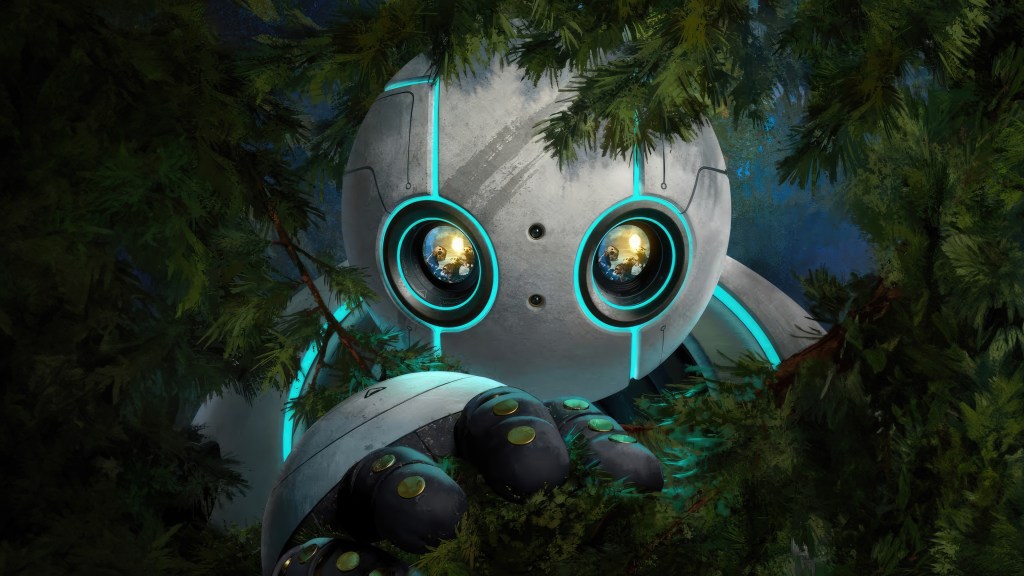
Based on the illustrated novel by Peter Brown, the film tells the story of a consumer robot, who during a storm crash lands onto an island inhabited only by animals. Rozzum 7187, nicknamed ‘Roz’ (Lupita Nyong’o), tries to adapt to the ways of the island but the animal inhabitants brand her as a monster. Eventually, she forms a companionship with sly fox, Fink (Pedro Pascal) and ends up with the responsibility of raising orphaned gosling, Brightbill (Kit Connor).
After Puss in Boots: The Last Wish started a thrilling new chapter for DreamWorks, The Wild Robot confirms that it was no fluke. As what is achieved here with the film’s animation is nothing short of stunning. Characters and landscapes are presented with beautiful bold colours and shading, often reminiscent of an acrylic painting. The character design of Fink is a standout, with each strand of his fur looking like singular brush strokes. It helps that his adorable look is complemented by an unrecognisable but still charismatic performance from Pedro Pascal. His voice is gleefully cunning and mischievous, but also vulnerable when it needs to be.
However, the real heart of the story comes from the titular robot itself, voiced by the always wonderful Lupita Nyong’o. A lot of the film relies on the audience being fully invested in the character of Roz, and N’yongo manages to portray copious amounts of emotion through her voice, while also maintaining a robotic delivery to keep the character feeling authentic. Kit Connor, fresh off the success of Netflix’s Heartstopper, also does great as the young gosling who imprints on Roz and has to connect with a community who see him as an outcast. He dons a pretty seamless American accent and the emotions conveyed through his performance further add believability to Roz, as their chemistry and bond are what makes up the film’s emotional core.
When it comes to humour in family films, many take the lazy route of making toilet gags, relying on pop culture references or using innuendo to appeal to the adult crowd. Refreshingly, The Wild Robot doesn’t feel the need to do any of that. Instead, it opts for a surprising amount of dark humour throughout its screenplay. Many of these instances occur through Catherine O’Hara’s possum mother, Pinktail and her litter of children, as she connects with Roz through their shared struggles of motherhood.
Through sharp, witty one-liners and great comedic timing, the film’s sense of humour, along with its excellent sentimentality give it the potential to become a timeless family favourite. That being said, some lines of dialogue do feel a little heavy-handed, particularly in the film’s third act. It’s quite possibly an intentional choice given the target audience, but these clunky moments do unfortunately stick out in a film otherwise full of subtlety.
And while the plot does have parallels with other animated films such as The Iron Giant (1999), or writer-director Chris Sanders’ DreamWorks debut How To Train Your Dragon (2010), the pacing and editing of every scene make The Wild Robot a joyous time from start to finish.
The way music is implemented also greatly adds to the film’s emotion. In one of the most memorable sequences, Brightbill learns to fly in a touching montage underscored by American singer-songwriter Maren Morris, whose two original songs could help the film gain further awards attention outside the animation categories. Possibly most deserving of recognition from the Academy, however, is Kris Bowers’ soaring musical score. He decides to forgo a predictable synthetic sound, instead using orchestral arrangements to amplify the film’s messages of the importance of teamwork, communication and environmental conservation.
It’s messages like these that make The Wild Robot a standout in the animation landscape, adding depth to an already creative and humorous story. In an entertainment world often gravitating towards irony, the film’s unapologetic sincerity is a refreshing change of pace. It’s what a family film should be: a thrilling and engaging watch for younger audiences, but with enough substance to make it worth revisiting when they grow up. So whether you are six or sixty, The Wild Robot has something for everyone.
Star Rating: ★ ★ ★ ★



 Not Too Loud
Leave a comment