Directed by: Amrou Al-Kadhi
Written by: Amrou Al-Kadhi
Run Time: 1 hours 40 minutes
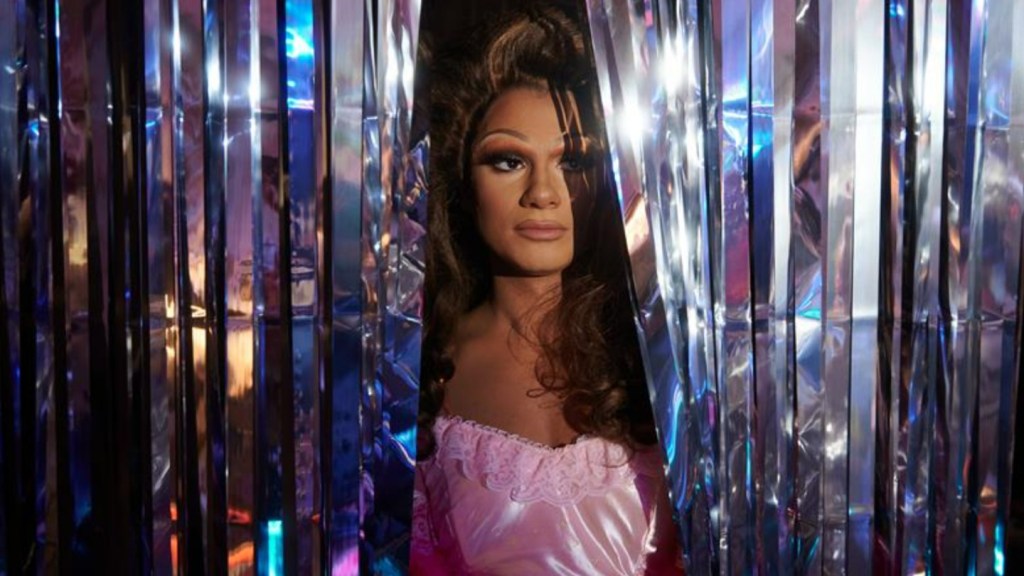
Drag has never been more mainstream. It’s currently enjoying a wealth of screen time, with drag queens (and kings!) popping up in our media everywhere you look – especially on TV. It’s exciting, then, to see this drag revolution extend its reach to the movies. Featuring a drag queen as its main character, Amrou Al-Kadhi’s debut feature Layla is the latest to showcase this art form.
Layla (Bilal Hasna) is a British-Palestinian, non-binary drag queen, who lives and works in London. While performing at a corporate drag event they meet advertising executive, Max (Louis Greatorex). After hitting it off the pair begin dating, but coming from very different sides of the community tensions begin to arise.
Layla is certainly well-informed in its representation of queer culture, displaying many of its features and issues that affect the community. In its opening scenes it unapologetically takes aim at corporate pride, highlighting the increasingly shameful pink washing that occurs each year. Elsewhere it comments on the prejudices that exist relating to femme gay men and non-binary people. While it also includes numerous cameos from well-known LGBTQ+ artists, making its depiction of queer culture an unquestionably authentic one.
However, these are more surface level features of the screenplay as it’s their title character’s non-binary identity that Al-Kadhi more specifically explores. They do this directly by having Layla explain to Max how they identify and what it means, but also through Layla’s own simultaneous existence within two cultures: the queer community and their traditional Muslim family. This is expanded upon further through their relationship with Max, as they become closer and discover which aspects of themselves they are willing to reveal to family, friends and each other.
Yet, while its themes are fresh and relevant the way they are presented feels, at times, unremarkable. It’s a predictable set-up that’s too obviously sign-posted directing both audiences and characters to the inevitable conclusion. In one scene, after watching a film at the cinema with Max, Layla complains about the film’s clunky metaphors, describing it as “agonisingly basic.” Thankfully, Layla doesn’t resemble anything just as demeaning as this, but it feels brave, if a little ironic to include such a description when Layla is often rather conventional itself.
It’s a shame, as there’s a lot of admirable work on display here. Layla is a vibrant and colourful film thanks to its rich cinematography and fabulous costume design. Its diverse cast have good chemistry, with lead actor Bilal Hasna in particular delivering a charming performance. And it does have some genuine laughs, as well as plenty of heart. But ultimately, its script is a little unfocused and too easily veers into cliché.
So while Layla has great attitude to its strut with moments that really do click, it’s like a queen’s first time in heels: endearing, but mostly unsteady.
Star Rating: ★ ★


 Not Too Loud
Leave a comment